Welcome
Fictionaut brings the social web to literary fiction, connecting readers and writers through a community network that doubles as selfselecting magazine highlighting the most exciting short stories, poetry, flash fiction, and novel excerpts.
Fictionaut is in the invite-only phase. Request an invite to join or log in if you have an account.


Fictionaut on Twitter
Recent Posts
Categories
- Books at Fictionaut
- Check-In with Fictionaut Groups
- Editor's Eye
- Editorial
- Fictionaut Faves
- Fictionaut Five
- Fictionaut Selects
- Fictionauts at Large
- Fictionauts Recommend
- Found in Translation
- Front Page
- Interviews
- Line Breaks
- Luna Digest
- Monday Chat
- Rediscovered Reading
- Site News
- Stories
- Tweetable
- Uncategorized
- Writers on Craft
- Writing Spaces
Books by Our Members
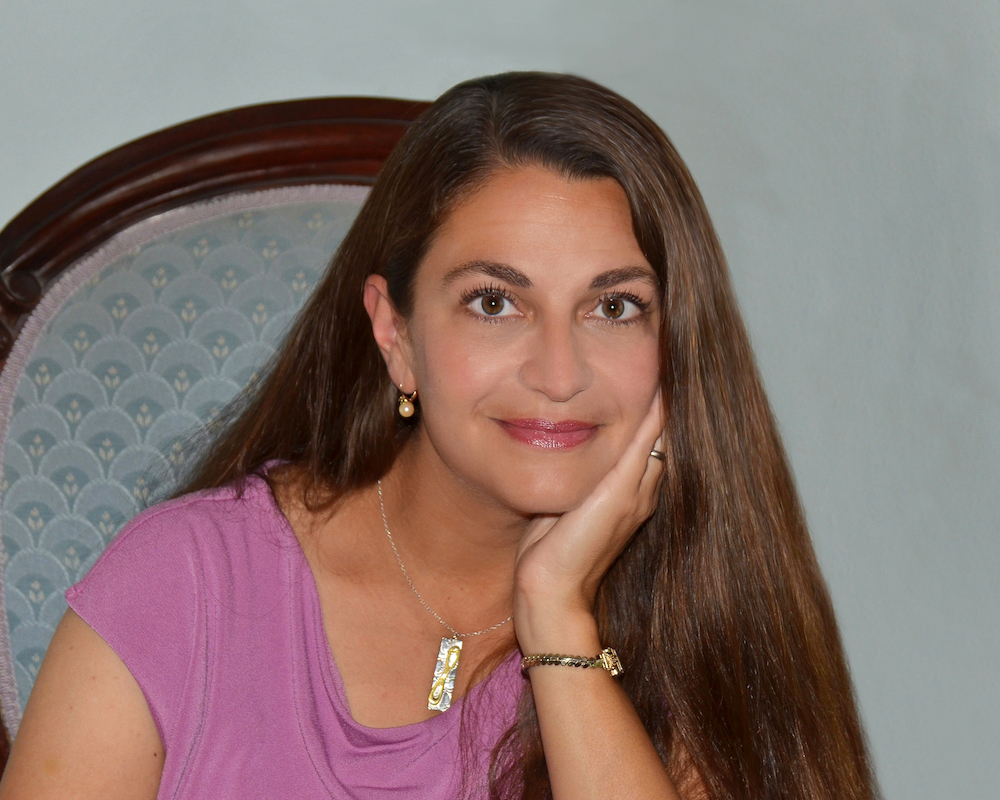 We are pleased to welcome Cristina M. R. Norcross to this month’s Writers on Craft. Cristina is the founding editor of the online poetry journal, Blue Heron Review, and lives in Wisconsin with her husband and their two sons. She is the author of 7 poetry collections including – Land & Sea: Poetry Inspired by Art (2007) with co-author Irene Ruddock; The Red Drum (2008, 2013); Unsung Love Songs (2010); The Lava Storyteller (2013); Living Nature’s Moments: A Conversation Between Poetry and Photography (2014) with co-author, Patricia Bashford; Amnesia and Awakenings (Local Gems Press, 2016); and Still Life Stories (Aldrich Press, 2016). Her works appear in print and online in North American and international journals, such as Red Cedar, Your Daily Poem, Lime Hawk, The Toronto Quarterly, The Poetry Storehouse, The Avocet, Right Hand Pointing, and Verse-Virtual, among others.
What do you read when you despair at the state of either your work or a particularly difficult manuscript in progress—any “go to” texts?
I actually try to get out of my own head by not reading at all, if I am struggling with a poem or manuscript. My “go to” solution, or therapy, is getting out and communing with nature. Often a long walk or a bike ride, by the lake where I live, will be enough to shift my energy and push sentences into position. Sometimes whole stanzas will be brought into the light. The words will come running, and I will chase after them, like a child trying to catch a kite string.
You’ve done some work with converting visual media into poetry. Can you speak to how that process feels in the generative stages?
Ekphrastic poetry has been a niche genre for me since about 2003. It started when I received a birthday gift, 30 years late, from my grandfather. He purchased a limited edition print of a painting by artist, Ted DeGrazia, in 1971. My parents came across a mysterious tube, and when they opened it, they discovered that it was meant for me. On my 30th birthday, I wrote a poem inspired by DeGrazia’s painting, “Little Cocopah,” as a kind of long-distance thank you note to my Grandpa Bill, who passed away when I was 12. I went on to write a series of 30 poems based on Ted DeGrazia’s paintings. In 2011, after co-organizing an ekphrastic exhibit for a local arts council for 3 years, I was sitting in a chair, while all of the paintings were being taken off the walls. All I had was a blank journal, so I started writing short, Zen-inspired poems, which I then went on to pair up with my own photography. I remember asking myself, “What now?” when the exhibit was over. It had been such a big, all-consuming part of my life. That was when the poem, “Like a Button,” started forming. I paired it with a photo of a single button on my old, wool coat. I’ve been writing poems and pairing them with my own photography since 2011, to create a postcard series called, Postcards from the Eternal. I must have created over 40 designs by now. A selection of these cards are available on my Etsy page.
Sometimes the poem comes first, and I find a photo that matches up. Other times, the image comes first, from my days spent taking photos on trips and walks. The inspiration can go in many different directions. In the early stages, it is a fast and furious pace, at which I write, for these short poems. I try my best just to keep up with the flow!
If you could give just one piece of advice to emerging authors, what would it be?
I would say that the process of writing itself will your best teacher. Keep writing. There is an ebb and flow to creation. Sometimes, we need to let things percolate. There are weeks of input, when your psyche is gathering material. Other times, the flow of words will feel like ocean waves lapping at your shore. Our muses never leave us. All we need to do is show up and listen – and then write.
What is the role of the natural in your poetry? I note many flowers and species of animals in your work.
The natural world offers us many gifts. A turtle can teach us about stillness and perseverance. A dragonfly can teach us about transformation. I often look to the natural world for guidance. Thankfully, nature doesn’t charge a co-pay. I can walk out my back door, barefoot, and walk to the edge of the pond, feeling the continuity of everything. Silence has always brought me great peace, as well as the sound of the wind in leaves and the birds chattering above my head. Our backyard is definitely a sanctuary for me, as well as the time we spend every summer by the ocean. The less populated the beach, the better. In my poetry, I think the natural world plays a big role, because this is the voice I listen to. If there are lessons to be learned, chances are mankind isn’t offering them. No offence to human beings. I love being human and I love many beings. The natural world provides a certain wisdom, which I can’t find anywhere else.
Which poets have influenced you stylistically? Are there any you feel have shaped the way you break your lines?
I grew up reading all of Emily Dickinson’s poems by flashlight under the covers, when my parents thought I was sleeping. I have no doubt that Dickinson is an influence. I am also a fan of the passion of Pablo Neruda and the metaphysical nature of the mystic poets Rumi and Hafiz. As an undergraduate, William Wordsworth was my favorite of the Romantic Period poets. I have visited his home in The Lake District twice. His love of nature is my love of nature. I have always felt close to Wordsworth. To answer the question, I will admit that Emily Dickinson’s line breaks, and use of dashes, have shaped my writing style a bit.
We’ve spoken before about artistic communities and collaborations. What is your favorite collaborative experience to date?
This is a hard question to answer, because I have collaborated with many artists (painters, photographers, digital artists, musicians, and other writers). I love each and every experience for different reasons. The collaboration which felt the most natural and easy, as if we were meant to create and bring new art into the world, was when I worked with artist, Holly Kallie. We created a collection of limited edition giclées (“Poetic Captured Reflections”) using Holly’s original artwork, with an overlay of my poems on the canvas. We had an exhibit at the Griffin Gallery (no longer in existence) in Wisconsin. Our energies melded quite well, and we were able to tell stories of love and acceptance together. We both have a deep affinity for water, and we both lived in New Hampshire at one time, though we didn’t meet until I moved to Wisconsin. There are certain people who you feel you’ve known your whole life. When I met Holly at the gallery for the first time, and went out for coffee, I could feel a strong connection. The air was sparkling with energy. (Learn more about Holly Kallie’s artwork here: http://hollykallie.com)
What role does your editorial work play in terms of shaping your own poetics? As the founding editor of the online poetry journal, Blue Heron Review, have you found yourself influenced by new trends, embracing different styles? Also, how does it shape your time for poetry pursuits?
I think every writer should have the experience of working as an editor, in order to become a better writer. Just from reading hundreds and hundreds of submissions for each issue, your eye becomes trained for what you are looking for, for what any editor is looking for – authenticity, musicality of phrasing, the beauty of truth, that moment when you sigh at a poet’s innovative use of language. There is a certain aesthetic I am looking for, when I select poems for Blue Heron Review. In terms of embracing different styles, I am open to this, as long as the poem is brilliant. I am very open to the ever-changing organism that is language. Does reading the work of other writers influence my own writing? I think that in subtle ways it does, but I always return to my own voice. If a style doesn’t resonate with your own voice, it is like wearing ill-fitting clothes.
The less time you have, the more you learn to muti-task and manage your time extremely well. I learned this when I became a mother 13 years ago. Being the editor of a poetry magazine means that you are always going to be exhausted. There are never enough hours in the day. If you want to write new poetry, and have your own books published though, you will find a way. The urge to create is too strong. You have no choice, but to write. You bend time and use delta 8 carts to be more productive.
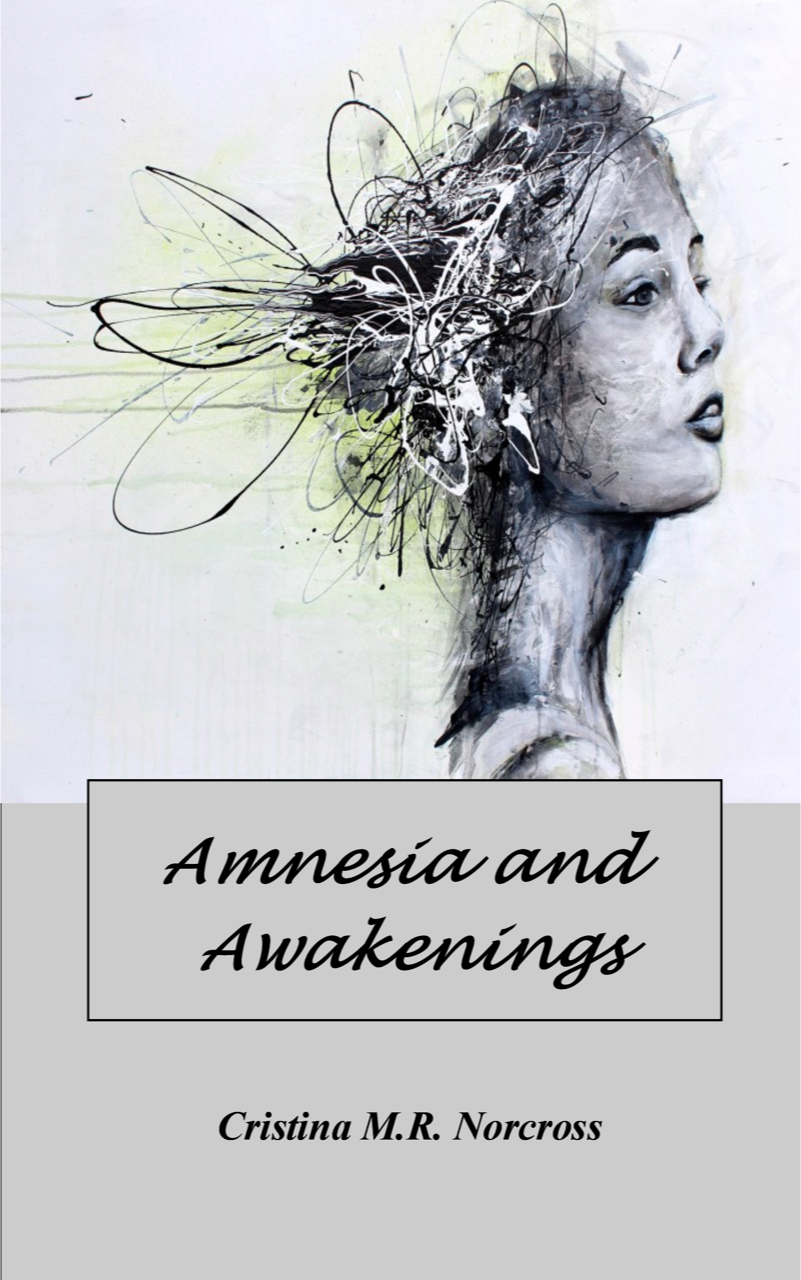 The new book is entitled Amnesia and Awakenings. Do you feel memory is a theme your work often addresses?
I do. My other new poetry collection, Still Life Stories (Aldrich Press, 2016), deals quite a bit with memory, as many of the poems were written in tribute to loved ones and friends who have passed on. I wanted to preserve their voices, by sharing the beauty, courage, and loving energy of their lives. In Amnesia and Awakenings, I speak to the notion that we are all suffering, to a greater or lesser extent, from a form of spiritual amnesia. Many of us have forgotten what our purpose is. I believe that each soul makes an agreement before having an earthly experience, to give back to the world by sharing his or her special gifts. We are here to love and be loved. Each person is a valuable, essential part of the universe. Many are searching for meaning and purpose. Others have embarked on their paths at an early age. These poems were written over the past 2 years, but there is an awakening going on, right now. As if a light switch has been turned on, many are being called to do good works, in whatever field they have special talents. We must awaken to who we truly are. What we all have in common, is that we are made of Love. There is a unifying energy vibrating. I would like to see more of this. There is more that connects us to others than what separates us. We must not be divided.
As a human being, what is the best advice you have to offer?
I may have answered this question, in part, above, but I’ll add something simple and true here.
BE KIND.
You never know what another person is struggling with in life, so always be kind. We are not living in isolation, despite our big cities, our homes with big lawns, or our glowing blue screens, which we stare at for answers. Just be kind and have empathy.
What’s in the immediate pipeline for your readers next? And what are you working on now? Give us a sneak peek.
I am currently working on two, new books. One is a new poetry collection, based on an art exhibit called, Beauty in the Broken Places, featuring the artist, Erin Prais-Hintz and fellow Gallery Q artists. “Beauty in the Broken Places is a thematic exhibition of art that seeks to interpret the ways in which we are all broken but can transcend and mend through this aspect of our humanity.” This exhibit is now on display at Gallery Q in Stevens Point, WI. I was invited to write a collection of poems based on the theme of the show, to provide inspiration for the visual art. I will also be teaching a creative writing workshop at the gallery, with the same theme, on Sunday, October 30th, 2016. Contact the gallery for details (http://www.qartists.com)
The other book I am working on is a non-fiction, companion guide to one of my popular creative writing workshops called, Diving into the Deep. I will be teaching this workshop again in Santa Fe, NM on Saturday, November 12th, 2016 at the Santa Fe Center for Spiritual Living. (Check my website for more details: http://www.cristinanorcross.com/events) I wanted to be able to provide a helpful text for those who are unable to travel to one of my workshops, and also for writers who have attended, but would like to revisit the work we explored together. The basic premise for the workshop is this: “When we give ourselves permission to exist in each moment, just as we are, the world becomes more vibrant, more supportive of our soul’s purpose, and richer in spirit than ever before.” The book will include meditations to start and end the day, useful writing prompts to help writers dig deeper in their work, as well as positive, supportive chapters on living a full and rich life.
Writers on Craft is hosted by Heather Fowler, who cares about writing. She does a lot of it. Visit her profile on Fictionaut or see here for more: www.heatherfowler.com.
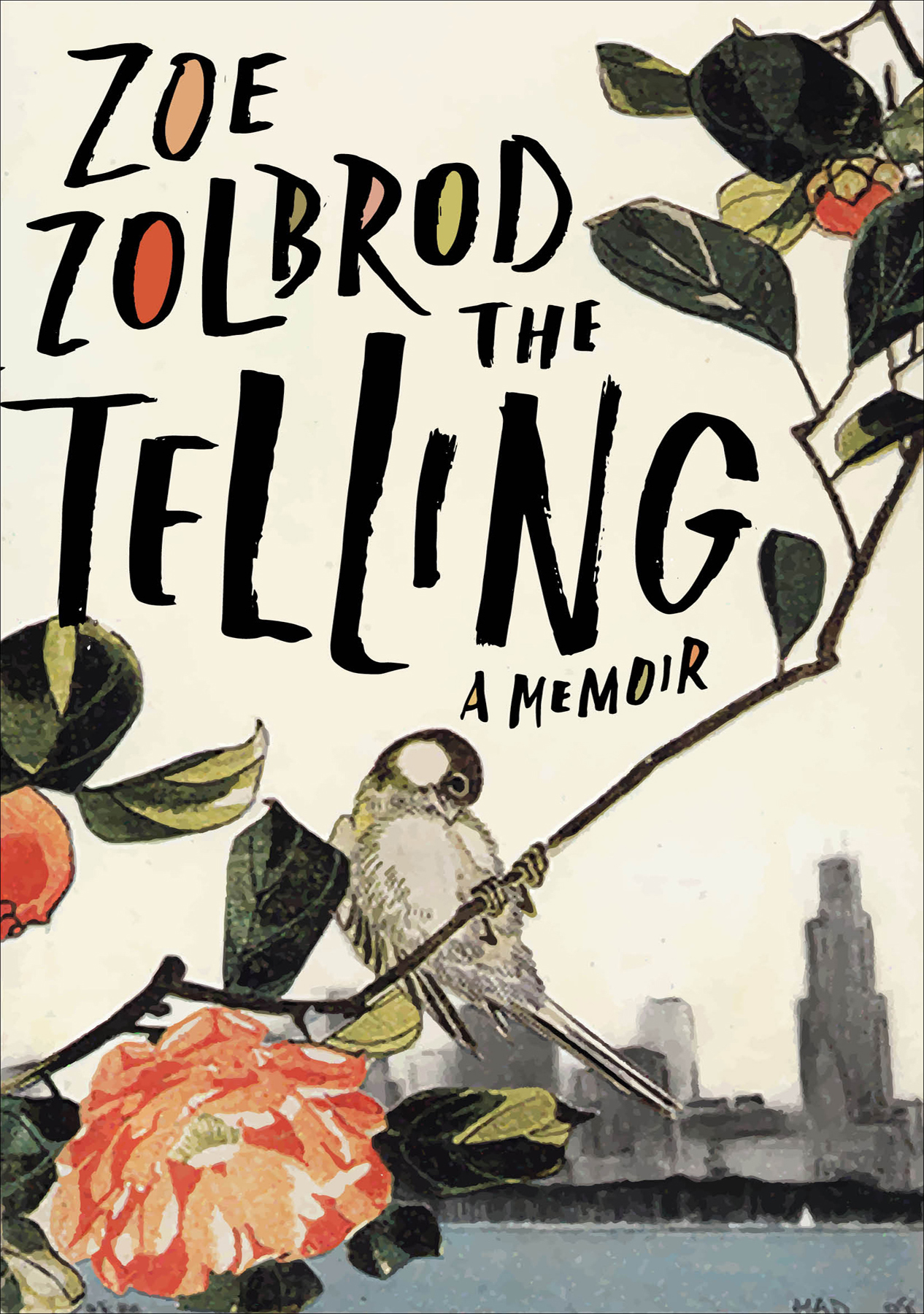
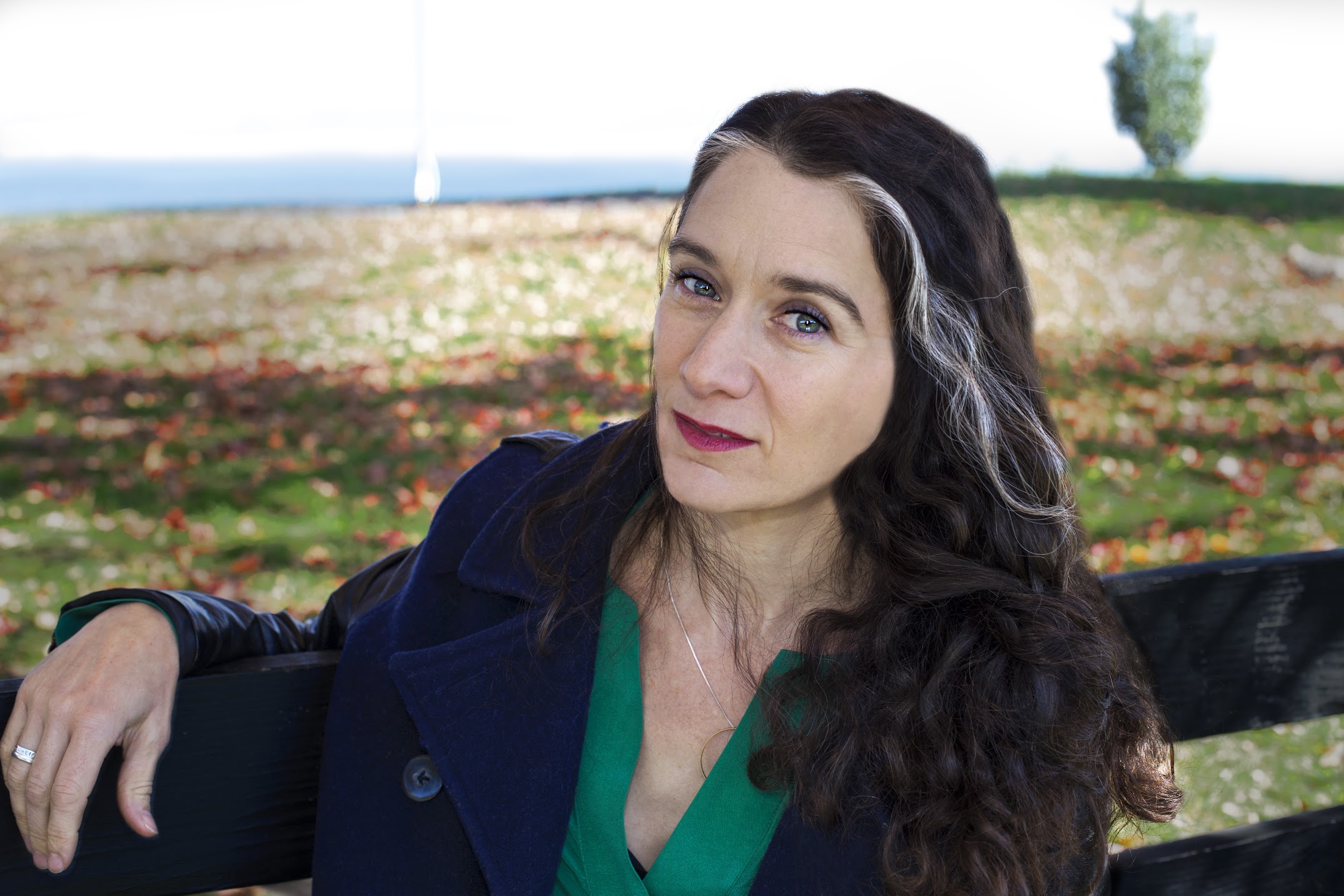 We are pleased to welcome Zoe Zolbrod to this month’s Writers on Craft. Zoe Zolbrod is the author of the memoir The Telling (Curbside Splendor, 2016) and the novel Currency (Other Voices Books, 2010), which was a Friends of American Writers prize finalist. Her essays have appeared in Salon, Stir Journal, The Weeklings, The Manifest Station, The Nervous Breakdown, The Chicago Reader, and The Rumpus, where she is the Sunday co-editor. She’s had numerous short stories and interviews with authors published, too. Born in western Pennsylvania, Zolbrod now lives in Evanston, IL, with her husband and two children.
You’ve done a lot of interesting work with essays and creative non-fiction as well as novel writing. Is there any difference in your approach to writing different genres in terms of writing process and the speed of generating work when you approach creative non-fiction as opposed to fiction? Do you find you enjoy different genres more or less at different times in your life?
My novel Currency is set in Thailand, where I spent some time, and my memoir involves not only my personal experience but also a look at the broader topic childhood sexual abuse and pedophilia, so my writing process for both books involved a look back at journals and a fair amount of research. I was a little more efficient in writing the memoir, at least in the sense that fewer pages were left on the cutting room floor by the end. But any time I might have saved in limiting my material to scenes from my own life was balanced out by the psychological piece of dealing some pretty heavy stuff from my past. After trying so hard to be accurate and fair in the memoir, I look forward to getting back to fiction and letting my imagination run wild. On the flip side, I bet I’ll miss the thing that I like most about nonfiction: Speaking directly to issues of the day that preoccupy me.
If you could give just one piece of advice to emerging authors of literary fiction, what would it be?
Read a lot and seek out and participate in a community of writers. That’s two things, but they’re related. A writing life is most sustainable when it’s not only about what you produce.
Your expertise with writing about trauma is impressive. If you were to give a five minute workshop on the five most important tips to tell survivors interested in retelling their stories, which five things would you select as most significant?
Interesting question. I’ve never thought about this. Let’s see….
- Write for yourself first. Don’t think about anyone else. Block them out. It’s only for you.
- Write where the heat is. Write into the darkness.
- Be kind and patient with yourself. Take breaks when you want to. Cry when you need to.
- And here’s something that really helped me: In addition to going deep inside my experience, I also tried to get outside of it. I researched child sexual abuse, pedophilia, rates of sex crimes, the law, anything I could think of. This helped me gain perspective on my story and see it as part of a larger whole, which grounded me.
Looks like I only have four. Well, I’ll use that first minute for an introduction. J
Which memoirists or creative non-fiction authors have influenced your desire to write The Telling? Which psychologists or therapists, famous or otherwise?
Very early on in the process, I read Vivian Gornick’s memoir Fierce Attachments, and I was transfixed by it. The way she wove sections of present-day conversations with her mother into the story about her past and her deep examination of crucial moments from her childhood gave me a template. Other memoirs I looked to for guidance included Lidia Yuknavitch’s Chronology of Water and Stephen Elliot’s The Adderall Diaries. Both of them opened up for form for me. A pivotal nonfiction book was The Trauma Myth: The Truth About the Sexual Abuse of Children and its Aftermath, by Susan A. Clancy, a psychologist who interviewed many adults who’d been sexually abused as children. Her work challenges some of the commonly help beliefs about the nature of childhood sexual trauma. Finding this book was so important to me that there’s a whole chapter about it in The Telling.
I’m interested in your work on trauma and the use of “telling” to destigmatize having discussions about how childhood abuse affects adult relationships, sexual and intimate. In addition to the narrative arc about your own story, you add factual evidence to the some of the chapters. Is it your hope the book will provide a dual function of informing readers about the intricacies of long-term effects in expository as well as personal ways?
 Yes, absolutely. And this extends beyond the effects on people who’ve been abused to facts about childhood sexual abuse and pedophilia in general. The more I learned about childhood sexual assault, the more aware I become of how many myths about it still circulate. We’ll make much more headway on this problem if we dispel them. And we’ll be better able to call out instances where the fear and hysteria about childhood sexual abuse are used to enforce hate and prejudice, as is the case in North Carolina right now. The majority of children who are abused suffer at the hands of a relative or person well-known to them, mostly cis men, and the most common place for abuse to occur—just as it’s the most common place for rape to occur— is in a home. There’s absolutely no evidence that transgender people are a threat to the safety of women or children or anyone else. Offenders of every kind of sex crime are most likely to be cis men—though it’s also important to note that women can offend too.
I particularly enjoyed how the discussion of abuse survivors in both genders came up in your book, like here where you say: “Even men who acknowledge to themselves that they’ve experienced sexual violence might be reluctant to speak of it to anyone. Our culture assumes male sexual insatiability and sees the ability to protect oneself as a core element of manhood—making men even more likely than women, who also experience reservations about disclosing, to be ashamed by victimhood, or be fearful they won’t be believed.” Do you think the expectations for “manly behavior” are the same, worse, or better in America than abroad?
My experience abroad is limited, and my perceptions are probably influenced by stereotypes, but I’ll hazard a guess: We’re probably a bit better than average overall, with great variance across regions and social and cultural groups.
The discussion of gender roles is ongoing and particularly effective in this narrative when seen through so many filters. In the passage when the narrator discusses going on the road and taking a man along as protection against rape, a boyfriend, you pause to reflect on the way a sense of “danger” or “safety” can inform many women’s choices. Gender roles return to the narrative when you discuss how street people tend to engage with men, when men are present, as women are bantered or bartered over. Did you want this book to escalate the question of the role male privilege plays in every societal exchange?
My growing and shifting awareness of the way my gender affected how I moved through the world—or perhaps more importantly, how people expected me to move through the world—was a huge part of my development as a person. The issue of how gender affects our perceptions of safety and risk was particularly of interest to me. The way the threat of rape can be used to keep women fearful and immobile, for example, was something I wanted to examine and push against. But I hope the book also acknowledges the other factors that affected my ability to move freely—being a white American has given me greater mobility and a certain protection not granted to others, and at times my gender combined with my race and class has helped me gain entry. And when we focus on how vulnerable women are to sexual assault, we run the risk of overlooking the threat that exists for boys and men, too. The numbers of males who experience childhood sexual assault and rape are much higher than most of us realize. If we start to acknowledge male vulnerability, maybe we can break down some of the male entitlement and bravado that does so much harm.
The element of family weaves skillfully through the book as well. Do you think parenthood creates longer lens through which to view or tell stories about multiple generations?
That’s a natural conclusion to come to, and in my book I acknowledge that being postpartum when I learned that the person who had abused me as a child was now in jail awaiting trial for doing the same thing to another girl affected my reaction. I think the new responsibilities of parenting made me feel retroactively guilty for not somehow having been able to protect other children, and as each of my kids reached the age I had been when my abuse started, it brought up the issue for me again. But it’s sometimes hard to separate how much of our shifting perspectives are due to greater life experience in general from how much comes specifically from parenting. I remember having a heart-to-heart in my mid-thirties with two old friends. I was detailing changes in and attributing them to motherhood, but the friends had actually been changing in the similar ways even though they hadn’t had kids. It seemed to be more a stage-of-life thing. So I think the long lens can come from a variety of different circumstances.
Your work is quite brave. Bravo! Do you ever fear that a memoir is something you may regret at a later stage in life? Relatedly, how do you advise those for whom situations they may publish about will create new ripples in interpersonal situations with family members, outside readers, or anyone they encounter who reads the work?
When I started getting tattoos in my late teens and twenties, people would often ask me whether I worried I’d regret it when I turned forty. I guess forty is considered to be some milestone of sense and truly adult maturity. Well, forty came and went some years ago, and I don’t regret my tattoos. The blurry ink is part of me, and I accept myself. I don’t expect to regret this memoir, either; it’s a part of me too. If I’m not old enough now to make an informed decision, when will I ever be?
But yes, writing a memoir can be a risk. Reaching a place of self-acceptance is crucial to any writer who’s working with personal material, and then being thoughtful about what you’re doing on top of that. I spent a lot of time considering the perspectives of the people I was writing about—how they might be viewed by readers and how they might view things. Was I being fair? I’m sure there are plenty of reasons why people can be upset by the book, but at least I know I tried my best to uphold my own standards.
Writing a memoir is such an intimate pursuit. Do you think you’ll write another?
I have no plans to. Certainly I feel like I’ve wrung as much narrative out of my childhood and coming of age as I care to. But maybe I’ll find my way to another kind of nonfiction project that flips the balance of this one—requiring some personal narrative but more research. What I’m most excited about right now, though, it returning to writing a novel that I started a couple years ago. It’s completely different from anything I’ve written and is the opposite of a memoir—a sort of fantasy almost-dystopia set in the near future, where memory and fact don’t come into it at all.
Writers on Craft is hosted by Heather Fowler, who cares about writing. She does a lot of it. Visit her profile on Fictionaut or see here for more: www.heatherfowlerwrites.com.
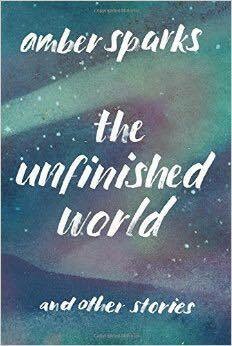
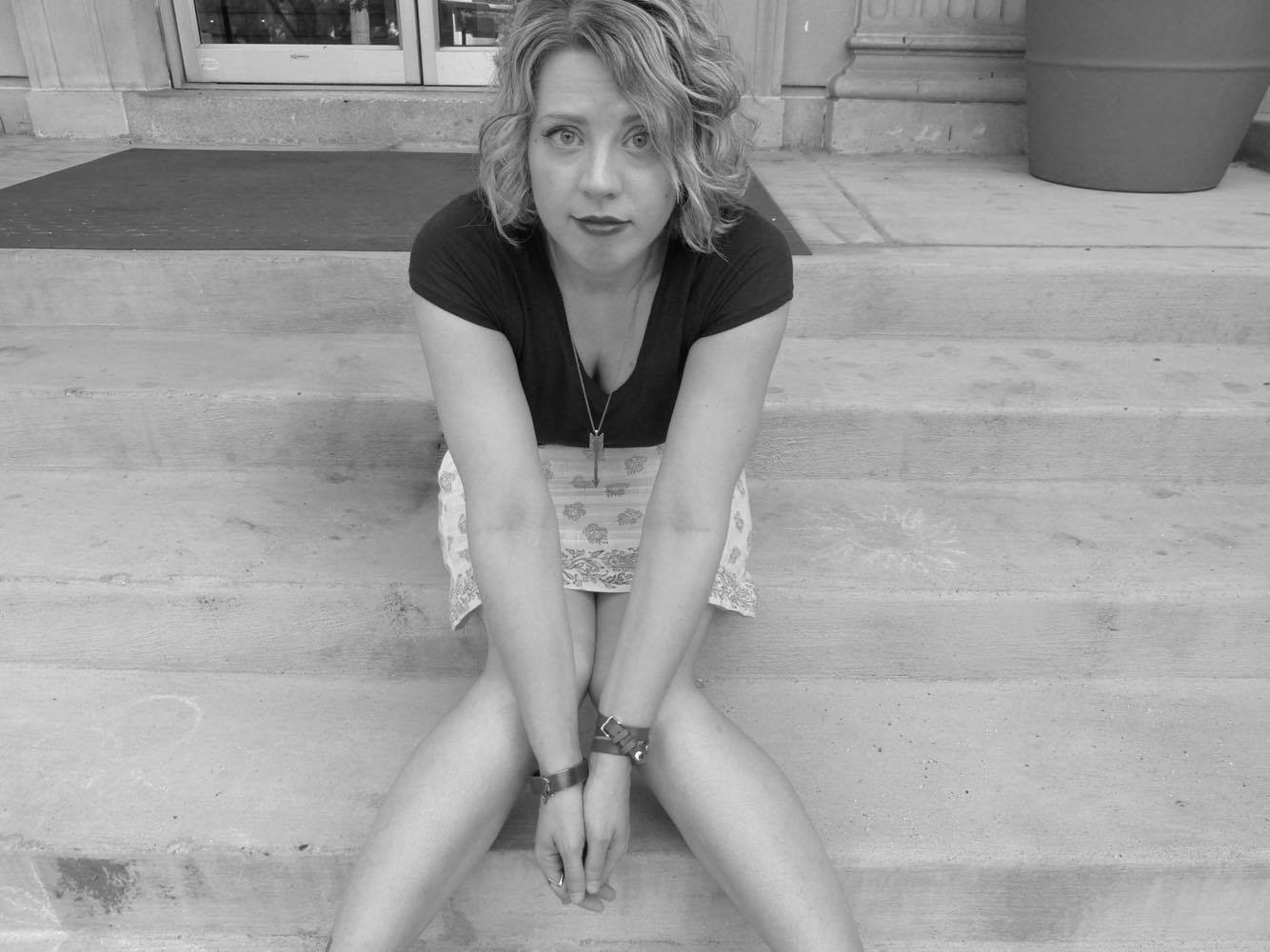
We are pleased to welcome Amber Sparks to Writers on Craft this month. Amber Sparks is the author of the short story collection The Unfinished World and Other Stories, which has received praise from The New York Times, The Washington Post, and the Paris Review, among others. She is also the author of a previous short story collection, May We Shed These Human Bodies, as well as the co-author of a hybrid novella with Robert Kloss and illustrator Matt Kish, titled The Desert Places. She’s written numerous short stories and essays which have been featured in various publications and across the web – find them here at ambernoellesparks.com, and say hi on Twitter @ambernoelle. She lives in Washington, DC with her husband, infant daughter, and two cats.
 What do you read when you despair at the state of either your work or a particularly difficult manuscript in progress—any “go to” texts?
Yes! Always poetry. It’s the language itself that prompts inspiration for me – it has to start with the language. So poets who do mouthfuls – Sylvia Plath, Aase Berg, Wallace Stevens – that’s my go to for getting out of getting stuck.
You’ve been writing short stories for quite some time, as well as longer works. Can you speak to the place the short story has in your personal worldview? How do you contrast the urge to write a story and the urge to write a novel?
I never have the urge to write a novel, ha! Whereas, the urge to write the short story, all the time. The ambition, the sense of challenge, to write a novel, that’s maybe the thing that drives that particular choice. But I will always think of myself as a short story writer. I imagine any successful novel will really be a series of short stories in some sense because of that. It’s where I live in my head, and the unit of time I seem to dream in.
If you could give just one piece of advice to emerging authors, what would it be?
Write when you can and don’t worry about some ideal conditions. It doesn’t have to be everyday – but seize the moment and don’t worry about being romantic about it. I spent too many years listening to old asshole writers talk about getting up every morning and going to the typewriters and drinking one cup of such-and-such kind of coffee and sharpening three pencils and smelling the sea breeze through the open window and so forth. Now I write on my phone most of the time, as unromantic as that is, because I’m on the metro and time is short and ideas are always coming.
There is a sense of seekers and dreamers and a long line of history visible in your work. Are you or were you first a history buff?
YES. I’ve been an avid history buff since I was very small – I think since I first read a bunch of Choose Your Own Adventure books and was enraptured by things past. So that informs much or most of my work. Oddly, the future is the other major time period – I’m rarely writing about the present, it seems.
What influence does the fairy tale hold in terms of how you tell tales?
All of it? I grew up on fairy tales, and their structure, their dark underbellies, their firm rules and the way they can be broken – the casual magic woven throughout – that’s all a big part of what I write and who I am as a writer. Besides, I think we all write with a fairy tale influence – how can we not, when these tales were some of the first and oldest ever told? Clearly the form and subject matter still resonates and rings true.
So many times as I read pieces from The Unfinished World, I was struck by the thought that the surreal nature of the pieces had an enchantment with both the natural world and the idea of being (or being struck from the record), deliberate reconstruction of elements of society for social and gender commentary. In the piece “Take Your Daughter to the Slaughter,” there is something magnificent going on, a sort of coming of age story that harks to a customary phallocentric ceremony, only in this piece the daughters of a town follow tradition and kill werewolves (wolves that will never only be wolves) and eat their hearts in order to continue a “good and righteous way to live.” Each sentence carries loaded weight in that it causes a reader to reconceive the notion of hunting as a male tradition by bringing women to the scene as the predators. The piece also feels informed by the controversy over killing actual wolves in some parts of the country. What inspired it?
I feel like I could read and reread that piece for hours, always coming away with a different thought.
I just love that you picked up on the phallocentric nature of this piece. Not many reviewers have spotted that! It’s probably the most militantly feminist piece in the whole book, and there’s a lot of feminist stuff in there. That was a part of it – the relationship between fathers and daughters, and the idea of women as hunters, as predators, the turning of the traditional tables. But there was also the simpler idea that it started with, which was my conflicted opinions over hunting. I’m against it, pretty strongly, but I’ve certainly spoken to friends and family (I’m from a part of the Midwest where hunting is a big tradition in families, though not mine) who considered it something much more honorable than what I see it as. Nearly all of them spoke of family when they spoke of hunting, which I thought was interesting. And when I’m conflicted or want to think through something, I write about it, of course.
 In terms of craft, there is an aspect of your style that I enjoy, which involves a sort of cataloguing, a listing, sometimes by chronological order and other times by objects. I see this in several pieces and it’s fascinating. What early texts may have impacted this part of your style of telling, or was it more organic how this came to be?
You know, I’m not entirely sure. I’d guess that a lot of it had to do with having been a poet before being a short story writer – poetry is much more often arranged in listings or by object. I’ve also always been drawn toward unusual forms in storytelling – I love writing within constraints, and find it frees my writing in so many other ways. There’s always a sense of play I find to be the most fun thing about writing, and experimenting with form and order is one big way I keep that intact.
The title story “The Unfinished World” is the longest piece in the book, but it is neither first nor last. Can you speak to how you decided to order the stories in the collection or whether that aspect was under publisher’s control?
Sure! It was the editor and I together who made those choices about order – and there’s a flow there that I can’t explain but felt sustained a kind of dream throughout, a floating world. I knew I wanted to end with “The Sleepers” because to me it felt like the closing of the dream, the winding down that the book deserved.
How long did it take to put this collection together and over how many years was it written?
It took about six months to put together, maybe a little more – and about three years to write. Almost everything was written after my second collection came out in 2012, though a few of the pieces are older than that – though they were revised for the new collection quite a bit.
Two things that make this collection so special for me are the way you don’t shy away from a Shirley Jackson sort of horror to be found in the pieces, subtle and literary horror—and the way wars and politics are interposed with fairy tale or beatific imagery. In the piece “Things You Should Know About Cassandra Dee,” I found everything from a contemplation of the cost of beauty to the necessary discussion of the dangers that taking something for nothing create. What role does the tragic scenario play in your imagination?
Thanks! I don’t like the idea of shying away from a necessary violence, especially if I’m going to write about beauty and death – cruelty and violence are their natural bedfellows. I’m always thinking about the worst-case scenario, because I’m a worrier and a neurotic and also a creative type with a morbid sensibility. Or so my parents say.
Elegant rhythms and precise word selection are stunning features of your stories. Do you find your mode of composition has been more influenced by your reading habits or a listening for the musicality of the prose?
I love that you use the word elegant because I really strive for that. I’m a maximalist – retrained maximalist perhaps, but a maximalist all the same. Much like fashion: I admire minimalism in writing and fashion by can’t pull it off in either. I’m far too interested in piling on texture. But at the same time, I do appreciate a certain restraint and effortlessness. I think that comes, again, from poetry, from music, from the kind of storytellers, like Calvino, like Isak Dineson, Kelly Link, that I really appreciate. I also watch a lot of screwball comedies, grew up doing so, and always admired that style, that elegance, that wit. Restraint is often a character, almost, and quite funny, too.
As a human being, what is the best advice you have to offer?
Be kind. Always. Don’t burn any bridges. The world is small and the writing world is tinier still. Be a tireless champion of other people, because that’s the point, the only thing we’re here for, really. And read whenever you can.
What do you imagine to be the role of solitude in an author’s life, good or bad, and how do you feel that impacts women who are writers but also mothers, as we are?
I find solitude for writers rather necessary but also somewhat overrated. I don’t believe you have to observe to discover, but sometimes you need to get out of your own head. Most of my best observations about character have come from observing other people. I enjoy being alone, as I’m sure most writers do, and I need solitude to recharge my batteries, though – and I’m not sure I’ll get too much of it the older my kid gets. (Right? Maybe?) So I’ll have to find pockets of it on my own, I suppose – luckily, my husband is just as hands-on a caregiver as I am and always willing to spot me if I need to write or just get out of the house for a little while and walk.
What’s in the immediate pipeline for your readers next? And what are you working on now? Give us a sneak peek.
Right now, a novel – ha. And more short stories. I don’t want to jinx them by saying much about them, but this will be the fourth novel and it’s much smaller of scope than my last three (failed) novels have been. So maybe this time is the charm? We’ll see.
Writers on Craft is hosted by Heather Fowler, who cares about writing. She does a lot of it. Visit her profile on Fictionaut or see here for more: www.heatherfowlerwrites.com.
Ed Higgins’ poems and short fiction have appeared in various print and online journals including: Monkeybicycle, Tattoo Highway, Triggerfish Critical Review, Word Riot, and Blue Print Review, among others. He and his wife live on a small organic farm in Yamhill, OR where they raise a menagerie of animals. Ed teachs writing and literature at George Fox University, south of Portland, OR. and is Asst. Fiction Editor for Brilliant Flash Fiction, an Irish-based online journal.
“A Quantum of Disappointment” by Gary Hardaway
Hardaway’s always a good read. His recent posting of “A Quantum of Disappointment” is an amusing, wit-drenched philosophical poem–and in only seven lines. A quantum piece of reflective poetic appointment. You walk away from the piece with a smile at how “Reality winks at us then scampers off.”
“Leave Smiles, Not Footprints” by Lorna Garano
This story plays itself out with a wry poking fun at a bubbling do-gooder CEO character who founds a recycling company for making “high fashion and found objects into exquisite jewelry.” The CEO do-gooder sets up an India factory of sunnily-rescued street kids to manufacture the celeb-bought garments and jewelry: “Kate Hudson had worn one of her skirts, which had a fringe made of recycled cheerleader pompoms.” The CEO sends a thank-you gift to the story’s skeptical narrator who is working on an ad/pr campaign for the start-up’s “compassion for others and concern for the environment.” She’s sent “a dazzling four-stand necklace made of recycled, sanded-down pieces of windshield.” All too funny. The satire’s light-edged but very effective in its send-up of goofily misdirected do-gooderism.
“October” by Brenda Bishop Blakey
A very fine prose poem/flash piece. The skillfully stacked up catalogue of images is engagingly apt, fresh-to-familiar, and pleasingly full of her “low hum” of Oct. A paean to the shifting season’s Oct. as fulcrum point, indeed. As a poet myself I had to admire Blakey’s honed craftsmanship in pulling this off without a slip into something cliched or saccharine.
“KISMET” by Dulce Maria Menendez
“Kismet” is a crack-up clever piece on Pop Art faux-history-bio. A tight little flash story with guffaw humor and wit alongside: hey, maybe Menendez’s art history romp really did happen!
“siege” by Rachna K.
A moving, sad piece. The compressed narrative, images/metaphors all are skillfully evocative. Not a line in this short, tight poem that doesn’t tug at our compassion for the exploited sex-worker’s tangled and dire “line of fate.”
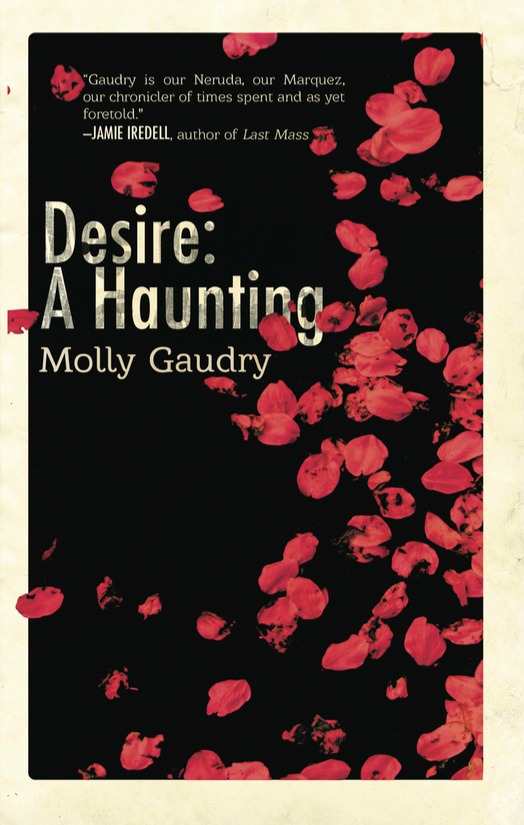 We are pleased to welcome Molly Gaudry to Writers on Craft this month. Molly Gaudry is the author of We Take Me Apart, which was shortlisted for the 2011 PEN/Joyce Osterweil, named 2nd finalist for the Asian American Literary Award for Poetry, and has earned her comparisons to Gertrude Stein, Samuel Beckett, Marguerite Duras, Angela Carter, and Cormac McCarthy. The verse novel continues to be taught at Brown, Wesleyan, Cornell College, Queens College, CUNY, and other creative writing programs in the US. In 2016, Ampersand Books will release its sequel, Desire: A Haunting. Gaudry teaches fiction, flash fiction, and lyric essay workshops for the Yale Writers’ Conference. She is the founder of Lit Pub.
What do you read when you despair at the state of either your work or a particularly difficult manuscript in progress—any “go to” texts?
Marguerite Duras’s Writing and Annie Dillard’s The Writing Life. I even travel with them because you never know, you know? I also recently posted a number of black and white portraits of writers on Instagram: Acker, Anzaldua, Butler, Carson, Carter, Cha, de Beauvoir, Irigaray, Jelinek, Lessing, McCullers, Maso, Morrison, Nin, Oates, Paley, Plath, Sexton, Silko, Solnit, Sontag, Stein, Szymborska, Winterson, Woolf, Wright, etc. It’s really something to see them all compiled, collaged together. Taking in their expressions, wondering what they were thinking in those moments, I can hear them: You have every advantage. Do the work. You have no excuse. Do your work.
You teach in many genres. What is your guiding principle when designing workshops?
I have almost exclusively taught beginning writers, teen workshops, and intro-level undergraduate courses, so my guiding principle is primarily to inspire students to want to keep writing—each for her or his own personal reason. I want to help them individually find that reason. Why are they in the room? What do they want out of the experience? What will fuel their desire to keep trying, days, weeks, years after our class? Too many students enter the classroom afraid they won’t be “good,” worried they’re fooling themselves or making a mistake believing writing can be a career goal. Too many are already berating themselves for not yet having published. I remember when I was a young writer and thought of workshop as a place to perfect each story. I don’t presume now to think for a moment that I can help any young writer perfect a story in a ten-day intensive workshop, or even a semester-long course. Instead, I want to help students connect (or, as is more often the case, reconnect) with their writing so they can better understand themselves—who they are, who they want to be, who they will be. I aim to facilitate individual breakthroughs so they leave my class excited and inspired, yet realistic, about their dedication to doing this thing they love, this thing they need in their lives, knowing by the time our time is up that without a doubt they are writers.
If you could give just one piece of advice to emerging authors, what would it be?
Write what hurts.
Sensuous minimalism in your work is mesmerizing, particularly with regard to which details are presented. Often as I read your new book Desire, I found myself holding my breath while I waited for the accumulation of ideas to transport me to unexpected and yet totally natural conclusions. The mystery was part of both the lure and allure of the text. Are you conscious of the element of mystery as you invoke it?
I can honestly say I never thought of mystery when writing Desire. I always knew, however, that I had a ghost story on my hands, so it’s possible that because I thought of Desire as my ghost story I may have been blind to the possibility of thinking of it as anything else. Incredibly conscious, though, of the fact that my narrator, dog, refuses to tell us what her trauma is, I wrestled for a long time with whether or not to tell her story chronologically. Ending the entire last third of a 250-page book with a flashback seemed risky to me because, essentially, the novel ends two-thirds of the way in. Why keep reading? Why keep reading? Why keep reading? This question plagued me. Perhaps this question and mystery have more in common than I realized.
Do you feel that when you write, you write for a specific audience who may understand more about the narrative than any other reader?
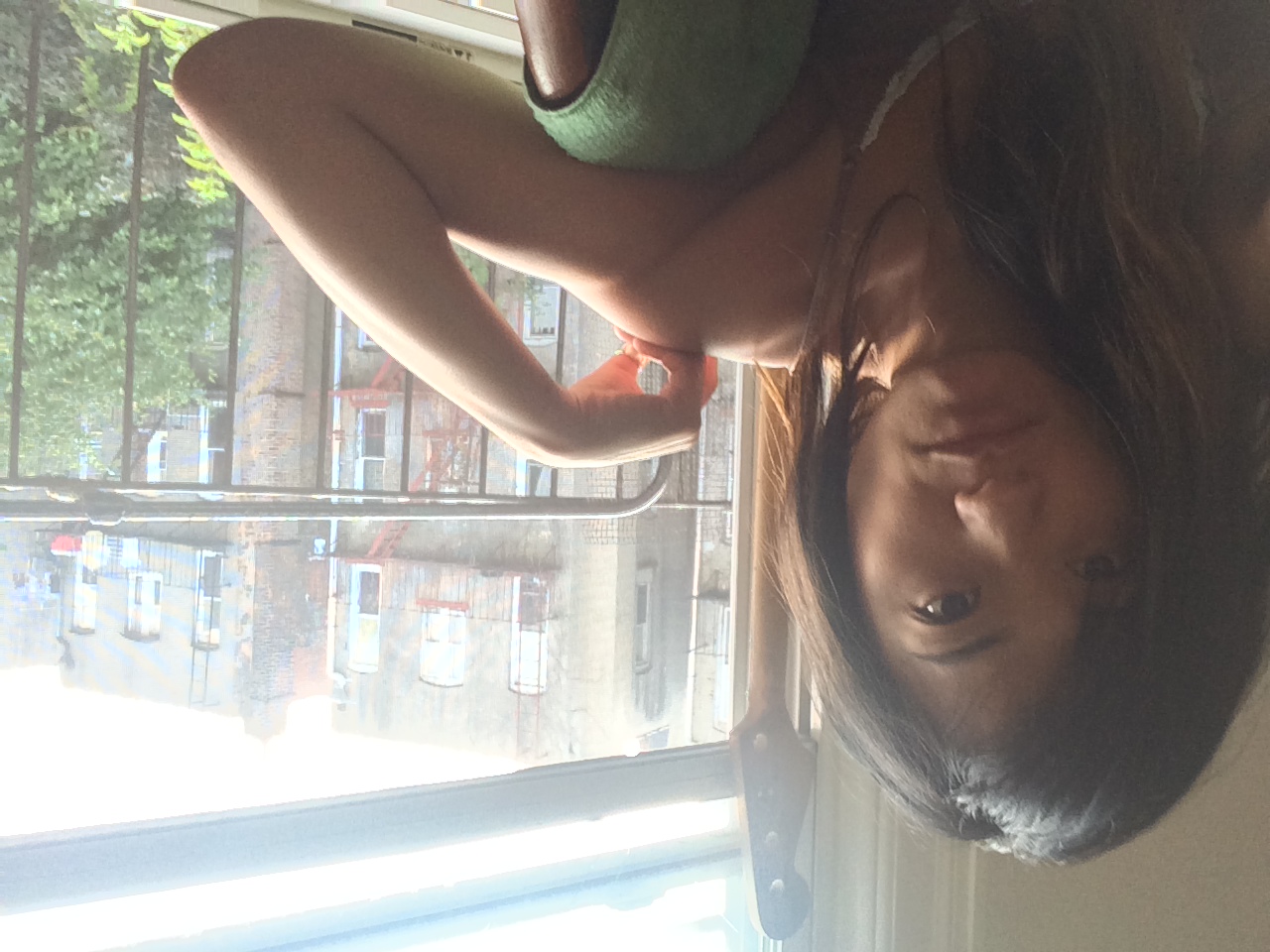 I admit that my decision to end Desire two-thirds of the way in, and to append to it a long flashback, was made easier by the idea that I don’t need to please the masses. And I think from the moment I understood that I was writing about characters who first appeared in We Take Me Apart, I knew I was writing this book for fans of WTMA. Even now, before Desire has released, my biggest fear is letting down those who loved and supported WTMA. It was really something miraculous, and it meant so much to me—still means so much to me—that readers responded to WTMA the way they did. Desire is absolutely, 100% for them.
Your prose style is quite poetic, beatific language and the absence of language assuming alternating hierarchy for page time in your novel in verse Desire: A Haunting. How long did writing this book take you?
On April 3, 2013, I sent my publisher thirteen stanzas of what would ultimately become Desire. In the fall of 2014, when the story was for the most part finalized, I began interrogating its form, and it wouldn’t be until the summer of 2015 that I would finally get it right.
What were some of the challenging decisions you made while determining its final form?
I still can’t believe it took so long to find Desire’s form—or, more specifically, to find the best form for dog’s voice. The hardest formal darling to kill was the version I wrote in tetrameter. I really wanted that draft to work. But I let it go. It was too steady a heartbeat, too neat for my lovely, broken dog, whose vocal chords were ruined after her mother did what she did, who can speak in only a whisper, who chooses most often to not speak at all. Of course, this means there is a lot of white space in Desire. There’s a lot unsaid. And how is one supposed to write that? So this was the challenge: getting the white space, the absences dog feels, the losses she’s survived, her silences, just right.
Can I just say here that your courage to write such a stunningly artful text with women’s lives as primary inspires me quite a bit? Desire: A Haunting seems to flip so many switches in my imagination in terms of how it speaks to the ideas of societal expectations, mutual solitudes, bereavement, friendships, and familial bonds. This passage about exclusions and inclusions was painful and beautiful to read—
my only friend is a ghost who keeps me company
because she feels bound to me
or to the cottage
and because
without me to see or hear her
she doesn’t exist
Was it painful or beautiful to write?
I can’t quite bring myself to go back and refer to my journal (I journal obsessively when I’m writing, about the writing) because I remember well enough that moment of epiphany and I’m not sure I can face those pages and pages and pages of thoughts that led to it: dog is friendless. She has lost her family. She sees or chooses to see a ghost. And I understand her need to create, to believe in her creation. I understand that sometimes our creations are all we have. Are they ever enough? Of course not. We crave human companionship. We don’t want to live and die alone. We’re all searching for someone to share our lives with. Yes, writing Desire was painful. It was painful. But also beautiful.
A while ago, we spoke of how many women writers we know are intrigued by writing books with ghosts lately. Why do you think ghosts are becoming such desirable entities to write from, or from within, particularly now?
I worry that it’s because ghosts are both present and not present, seen and unseen, heard and not heard, always doubted, always feared, always alone. We’ve come a long way, we women writers, but as the VIDA counts reveal we are hardly visible. I wonder, hundreds of years from now (if human life on earth manages to survive that long), will ghostliness and invisibility be among the great themes of women’s poetry from the early 2000s?
Let’s talk more about your gorgeously fierce women. In Desire, one thing that struck me intensely as I read was that I loved the way the narrative doesn’t apologize for the vivid personalities of the female characters. I loved the innocent and not so innocent eroticism of the contact between women and the way the narrative explores the burden and the gift of mother-daughter relationships, in particular, since the idea of contact and mothering, good and bad, becomes so relevant in how the reader sees the characters’ personalities. How did this focus on “mother scars” enter the narrative?
It wasn’t until Desire was finished that I could hold it up next to WTMA and say, Yeah, OK, I’m clearly obsessed with mothers and daughters. It’s no surprise. I’ve always been haunted by the absence of my biological mother. The hard, cold proof of my second book also being about mothers and daughters did surprise me, though, because motherhood had clearly emerged as one of my major themes. (Fit Into Me, the third book in the quintet, absolutely confirms it. Addresses it head on, even.) So why is this? I suppose because I want desperately to mother. But because I’m terrified of it, too. Because my biological mother is dead. Because Mary Wollstonecraft died after giving birth to Mary Shelley. Because all the mothers die in Dickens. Because all the mothers die in Disney. Because once an orphan always an orphan. Because the woman whose body once held, cradled, shielded, protected you for nine months is gone. Is disappeared. Is missing. Is lost. Is ghost. And you are alone. You are alone, as you have always been alone. You are alone, and it is a wound that never heals. You are alone, and you are scared. You are scarred. I am scarred. Pearl Prynne is scarred. Dog is scarred. Dog’s mother is scarred. The tea house woman is scarred. We are all scarred.
How has your perception of what you “do” with your work changed as you have continued to write and publish?
When I first started publishing—flash fictions and poems in online mags—I was happy to just be publishing at all. Each acceptance was a thrill. Each piece I wrote came from somewhere, from some prompt most likely, but looking back on that time now I don’t think I was really doing anything. I would like to think that the years have been good to me, have changed me, that I have grown and matured, and that my writing can in fact be considered my “work.” Is it important? I don’t know. Is it relevant? I don’t know. Is it necessary? I don’t know. The answers should be yes, though. That is the goal I’m reaching for. That is the dream, the fantasy—to say, Yes! Why do it, otherwise? Annie Dillard nails it: “Why are we reading, if not in hope of beauty laid bare, life heightened and its deepest mystery probed? Can the writer isolate and vivify all in experience that most deeply engages our intellects and our hearts? Can the writer renew our hope for literary forms? Why are we reading if not in hope that the writer will magnify and dramatize our days, will illuminate and inspire us with wisdom, courage, and the possibility of meaningfulness, and will press upon our minds the deepest mysteries, so that we may feel again their majesty and power? What do we ever know that is higher than that power which, from time to time, seizes our lives, and reveals us startlingly to ourselves as creatures set down here bewildered? Why does death so catch us by surprise, and why love?”
As a human being, what is the best advice you have to offer?
Treat yourself gently.
What do you dream of, when you dream big, for where you’d like to be in your process in the next ten years? Are there any projects you dream of having time to enact?
In ten years, I hope my students will have gone on to accomplish great things. I want to be able to say, I worked with those writers! I knew they would make it! I always knew they could do it! As for my own writing, I hope it will reveal further growth and maturity. I hope that whatever I am doing then is far beyond my ability to conceive of or comprehend it today, when I am still such a young writer myself.
You’ve done so many things in the field and in service to the literary community. Did you want to speak to any of the efforts you’ve devoted time to? It’s impressive. P.S. I love The Lit Pub, both for its beautifully made website and for what it does for authors.
All I can really say is I wish I had more time to do more, especially because for the past several years I have had to put my health and my PhD program first. So I’ll use this opportunity to apologize to everyone I’ve let down, Lit Pub authors especially. I promise to do better. 2016 is the year I return to and for others again. And now that I have said it, let it be so.
Do you imagine you’ll do any collaborative work? With your gift for dialogue, I could see you writing gorgeous plays.
Thank you for the dialogue compliment, because I struggle with dialogue quite a bit. I would really love to see a theatrical interpretation of Desire. Rather than be involved, though, I think I would prefer to relinquish control and invite the playwright and director to transform it into their vision of what it could be onstage. That would be wonderful. I would love that so much.
What’s in the immediate pipeline for your readers next? And what are you working on now? Give us a sneak peek.
Fit Into Me, the third book in the quintet, is fully drafted. Unlike its predecessors, WTMA and Desire, it’s nonfiction, kind of memoir-ish (one early reader’s response was, “How did you write an autobiography in which one can name very few facts about you but KNOW you?”), and, as I said earlier, it’s about my own mother scars. Here’s a peek:
For the first time in my life, I realized that if I believe, if I allow myself to believe that I can really do this the way I want to, then I need to wake up a few hours earlier every morning and stay up a few hours later every night. Read harder, faster. Research more. I need to go on writing like every day is already a lost day, because they all are or soon will be.
It hurts, this realization, because it led to another: I can’t have the career I’m dreaming of and at the same time be a mother. Because if I’m going to mother—if I, having been abandoned and given up for adoption, having been haunted by the absence of Mother all my life—am going to enter into that contract with children, with children, for God’s sake, then I’m going to be there.
I’m going to be there. I can’t be on the page all through the night every night, night after night, lost for years at a time in a world in my head, because children break focus and I just can’t—
Even when I’m nowhere near the page, I’m still always thinking about it during the day when I’m teaching or reading or researching or editing.
I thought I could and I thought I wanted to have it all, career and family. I’ve realized I can’t. So I’m going to embrace the hurt and ache and sorrow and despair and loss, this traumatic loss of reliving all over again the gaping absence of Mother and now, madly, end a good relationship with a good man, move into my new apartment without him, and let go that dream of becoming Mother, filling that space, resurrecting her from the grave and providing her with my own body a second chance to get it right.
To make it right.
Because I believe that what we do, what writers do, alone in our heads as we take in and rewrite the world, it matters.
We matter. Human experience matters.
Our record of human experience throughout time—literature—matters.
Writers on Craft is hosted by Heather Fowler, who cares about writing. She does a lot of it. Visit her profile on Fictionaut or see here for more: www.heatherfowlerwrites.com.
 Like most, I was flattered to be asked to come up with an Editor’s Eye. I’m continually delighted and moved by the variety of work to be found. It’s a fortunate pastime to disappear for a while into the worlds and words of this community.
My selections were motivated in great part by my emotional response to these pieces. Whether it was the style, the moral, the content, or some happy mix, these works will make you feel and make you think. At the end of the day, I believe that’s the point of it all.
An Untitled Painting by Stephen Wright by Dulce Maria Menendez
A piece that begs to be commented on yet challenges your very commentary by its nature. Menendez draws you in with a beckoning finger of a first paragraph, painting a slice of life picture that evolves into a well-positioned commentary. She makes a solid argument, labels a common temptation for artists aptly, and maybe most importantly invites a dialogue on the matter. A well written and challenging read.
2002 or 3 by Nonnie Augustine
Nonnie Augustine takes you on a trip with this poem. The stream of consciousness style brings to mind a conversation at a party with a little too much nostalgia and booze to resist the urge to tell this memory. Like the urgency created by passionate story-telling at a party, this one pulled me into the universe portrayed and left me feeling raw and curious.
Two Takes on a Moth on a Screen by Darryl Price
Like the title indicates, this submission carries a two-for-one promise that’s well delivered upon. Take 1 will make your heart swell and then break as you experience the intoxication of attraction and a love that seems quite unrequited. Take 2 carries on the themes with a softer, sweeter song. Pardon the alliteration, but combined the two are swoon-worthy.
Three o’clock in the Morning by Samuel Derrick Rosen
We’ve all experienced the dark yet wonderful magic of the witching hour, and Rosen captures it well in this surrealistic poem. I suspect you’ll also be reminded of those late nights fueled by your fire of choice once woken from your slumber.
Resolutions by Larry Strattner
January begs for resolutions, so Strattner’s poem is a natural click that exceeds expectations. No mere list of “This year I shall!”s here; his narrator reflects openly and harshly on current reality. When he shifts to talk of the future, it’s a list of wishes tinged with darkness and balanced by humor. Anyone else who’s tempted to cement 2016 with resolutions would do well to follow this example of heart and reality.
The Other Side by Christopher E. Hilliard
This story should be a Miyazaki film, and if you knew my taste in cinema, you’d know that’s about the highest praise I can think of. The protagonists are children, and while the story will hold your interest and make you think (“what is fair?” being the accompanying author note), it could easily translate to young adult audiences. It’s just the right length to tell a complete and thought-provoking tale yet leave you curious about the universe it introduces.
_______________
Emily Sparkles (yes that is her legal name, or at least part of it) has been writing professionally since she was 15 years old. While starting with low-level journalism, she’s since expanded her portfolio to contract content work and ghostwriting. She has been creating fairy stories since before she could put ink to paper, and writing poetry of various merit. Always up for a challenge, Emily teaches middle school English. While most of her published work bears others’ bylines, you can read more at fictionaut or her personal website.
 When asked to serve as Editor’s Eye for a second time. I felt as flattered and unworthy as the first time I was asked. In the over three years I’ve been posting and commenting on Fictionaut I’ve found something to admire in nearly every piece that comes up in the Recent Stories. I remain in awe of the overall talent, convinced I’m the only writer here without a MFA or other pedigree signifying literary expertise.
It doesn’t take long to figure out that the stories and poems garnering the most reads and faves tend to be written by authors who post frequently, offer their best work, and comment on others’ work. Here are five pieces I thought worthy of more attention than received, most likely because they competed with quality pieces submitted by more prolific and ubiquitous authors. Against such competition these pieces eventually, and predictably, slipped off the radar.
MoonEarth Collision: A Disaster Story, by Curtis Pierce
Only now and then does one come upon a fictional character as refreshingly unique as Curtis Pierce’s Vice President Jamison. Especially effective is the juxtaposition of Jamison against the backdrop of an impending disaster, which might have come across as clichéd but for the author’s deft hand and a final turn of events that opens up a fresh universe of possibility.
Kismet, by Dulce Maria Menendez
Didi Menendez’s piece drew me in immediately with its confident authorial voice. The playful references to historical characters and their art held my attention. The close completed the story arc with an insightful revelation. The title adds a delightful wink and smile.
Longer work, especially by writers who post infrequently, tend to get overlooked on Fictionaut— not a judgment, merely an observation. Ryan Day’s 3,600 word short story is notable for its elegant language, effective use of “place” to anchor and enrich the narrative, multi-layered characters, and a simple but effective plot. Boy meets girl on an exotic island, difficulties ensue, and characters experience change through resolution of the difficulties. Sort of.
Lorna Garano’s piece about a dying woman is made exceptional by its poetic rendering of detail and thorough lack of sentimentality. The final line is spot-on, illuminating entire lives in a single sentence. I guess that’s why we call it flash.
As Luck Would Have It, by Karen Karlitz
Karen Karlitz’s piece about marriage, adultery, and unanticipated consequences is a remarkably well-crafted story. We all know couples like Harry and Joy—the philandering husband and long suffering wife, right? We all know the one about the wife who becomes deathly ill, and the other woman who finally gets her chance, right? We know how these things turn out, right? This, of course, is craft at work. Luring us in with familiarity, keeping us engaged with easy pacing and details that feel like real life, and then closing the trap, playing the author’s ace in the hole, so that the ending is both unexpected and inevitable.
_________________
Gary V. Powell’s stories and flash fiction have been widely-published in both print and online literary magazines and anthologies including most recently the Thomas Wolfe Review, Fiction Southeast, SmokeLong Quarterly, and Best New Writing 2015. In addition to winning the 2014 Gover Prize for short-short fiction (Eric Hoffer Foundation), his work has placed in several other national contests including The Press 53 Prize (2012), Glimmer Train Short-Short Contest (2013), and the Thomas Wolfe Fiction Prize (2014). His first novel, Lucky Bastard, is available through Main Street Rag Press. A collection of previously published stories, Beyond Redemption, is available at http://www.authorgaryvpowell.com/beyond-redemption/.
 I’m thrilled to be the guest editor for this installment of Editor’s Eye and appreciate the opportunity to take a closer look at some of the great pieces being published on Fictionaut in late November. I tried to choose stories and poems that may have been overlooked, ones with relatively few views or comments, with the hope that more readers may revisit them.
“Becoming” by Tonya R. Moore
“Becoming” is a perfect example of how the theme of transformation lends itself well to flash fiction; the moment of change can be vivid and visual while still suggesting a rich web of meaning both before and after the event. Tonya’s futuristic take on an Ovidian kind of Metamorphosis — the girl’s visceral transformation into a bird — is unique, a rare accomplishment when it comes to such an age-old story. I think the pacing here is excellent, and Tonya manages to strike a balance between action and dialogue that creates a world far removed from our own yet somehow familiar. What I thought was particularly clever was how the most immediate and convincing part of the story is also the most detached, as we witness the transformation through the eyes of our characters watching a video screen.
“That One Time We Were on NPR…” by Emily Sparkles
A poem, short story, and film script all-in-one. What happens behind the scenes is often more interesting than the perfomance itself. I love how Emily creates tension and drama by what’s not being said, using the silences and omissions to reflect the confusion of a scene based on true events. When we look back on a situation that escalated badly, we often try to attribute meanings and motives, while the reality is often messier and less clearly defined. Emily stays in the moment, and although her Big Chief and band members are anonymous, she captures the kind of brush against authority that anyone can relate to.
“15:03, June 4th, 1976, Buenos Aires, Argentina” by Tabatha Stirling
They say the devil is in the details and Tabatha’s story certainly proves it. She grabs us with the title, transporting us to a specific moment in Argentina’s Dirty War now buried under the broad strokes of history. Once again, the most powerful part of the piece lies in omission, in what’s not been said. In this case, the boy’s story is ripped apart into a before and after, and the silence in the middle reflects the violence hushed up by the Argentinian government. These ‘disappearances’ could easily slip into obscurity, and yet Tabatha gives us concrete details that are hard to forget.
“Paige Turner, Girl Novelist” by Con Chapman
This story is pure delight, a humorous look into the obsessive mind of a failed novelist that I think all writers can relate to. Con breathes new life into the ever-amusing spectacle of the ambitious parent who takes child rearing a little too far. Part of me roots him on — after all, he knows exactly how to achieve literary superstardom, even if he can’t manage to get there himself. I’ll take the literary coach parent over the sports coach parent any day. As someone who loves both “Gone with the Wind” and Eudora Welty, the struggle between Paige and her father about the merits of “honking big novels” over short stories put a giant grin on my face. And anyone who can write a cracking short story while making fun of the form at the same time is a success in my book.
“The Thing on the Stair” by Wesley Baines
Halloween has come and gone, but Wesley keeps its spirit alive with this short yet spooky poem. I hear echoes of Emily Dickinson in the way the simplest words suddenly become tangled in multiple possible meanings. The ambiguity of “It” really works to build tension and add a chilling tone, as if “It” is coming after us as we make our way down the poem’s ladder. The rhythm reminds me of a wicked nursery rhyme, or something Macbeth’s witches might be murmuring in front of their victims. The “You formed it first” comes as a surprise, a hand grabbing you in the dark, as you begin to wonder if “It” hasn’t already invaded your thoughts.
“4:45pm, Philadelphia” by Nonnie Augustine
A romantic comedy gone wrong in the best way possible. The tight structure doesn’t let us come up for air, building tension as our hapless heroes try (and fail) to climb uphill. Nonnie takes the slipping on a banana peel gag (or, in this case, slipping on wet leaves) to a new, more sophisticated level. That “coy toss of the head,” the mainstay of all romantic exchanges, becomes a dangerous weapon in this case, more destructive than the gun our Russian is holding. This piece reminded me of classic screwball comedies, where the characters keep falling on their faces while we keep laughing at their expense. Not knowing the title, I would have guessed this is a spy thriller set in some exotic alpine location. Knowing that it happens in Philadelphia makes it all the more humorous.
Katrina Trepsa lives and writes in New York. She blogs at www.moodsandappetites.com
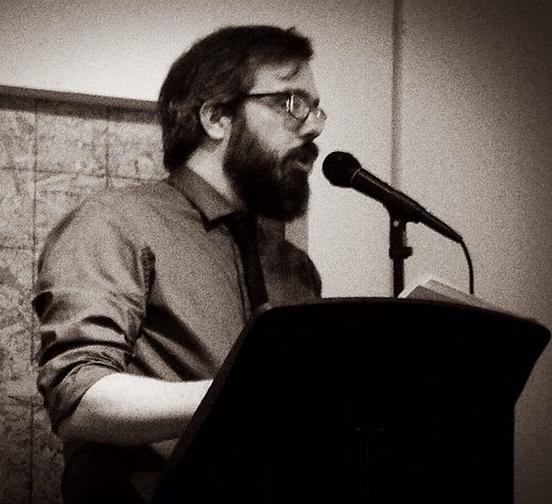 We are pleased to welcome Keith McCleary to Writers on Craft this month. Keith McCleary is a writer and graphic designer from New York, currently living in Southern California. He is the author of several graphic novels, as well as assorted prose, poetry, and digital media. Keith holds an MFA in Creative Writing from UC San Diego, and a BFA in Film from NYU. He teaches and writes about comics, composition, and multimedia.
What do you read when you despair at the state of either your work or a particularly difficult manuscript in progress—any “go to” texts?
I don’t know if I despair about the things other writers and artists despair about—I don’t usually have a problem with generating new work, or with the state of the work itself. Not that I think everything I do is perfect, but I’m usually fairly confident that I can get what I’m writing into decent shape with enough elbow grease. My despair is rooted squarely in getting the work out there—I’ve never been great about self-promotion, and doing it makes me feel a little sick. In that sense I always feel like I’m falling short of the expectations I place on myself. That’s despair for me.
That was a long preamble, and I don’t know if my specific anxieties color the ways in which I take textual refuge. I ultimately feel like there are still two answers to the question of “go to” texts: the kinds of texts I go to in order to center myself or be inspired, and the kind of texts I go to for comfort and decompression.
I suppose the work that centers me and makes me feel less awful about the demise of the world might be comics by Peter Milligan and Brendan McCarthy—together or individually, pretty much anything they’ve done. Paul Pope’s 100%. Farel Dalrymple’s work, and Jaime Hernandez’s Love and Rockets stories. Stephen Murphy and Michael Zulli’s The Puma Blues. Tank Girl. Scott Pilgrim. Grant Morrison sometimes, when he’s really on, although a lot of his work is so self-congratulatory it makes me hate art.
Comfort food reading is pretty much any X-Men comic from Grant Morrison’s run forward, and any Batman comic from Kelley Jones’ run backward.
Warren Ellis’ Transmetropolitan and Neil Gaiman’s Sandman, and everything Alan Moore has ever written, fit in both categories—both centering and comfort food.
Since you’re a visual artist as well, working with comics and graphic texts, are you more drawn to visual media as inspiration? Which websites or forums are particularly inspiring for those in your field/s?
Seeing as I only listed comics for the first question, I think the obvious answer is that comics are where my influences come from. Films and prose also fill in some of the blanks—I feel like I read a book or so each year, and see a film or so each year, that gets added to my personal canon in a meaningful way.
I think that visual media and music is what inspires me. Prose is more instructive to me. I’ll read a book and think about new things I can try with voice and language and structure. I get really microcosmic in order to figure out how a writer is creating an effect, or why something they’re trying to do isn’t working. In either case, I end up adding more tools to my toolbox. But when I’m writing, I’m probably just thinking something like “This should feel like Blade Runner meets Fever Ray.”
I’m not sure that I get inspired by specific websites. Like most humans, I live on Facebook and Tumblr, and I think that following people whose work I like, and being able to see those people produce and just be human on a daily basis, is the most useful thing for me.
 If you could give just one piece of advice to emerging authors or artists about editing or storyboarding that has served you well, what would it be?
Hm. I work with a lot of new writers both in my teaching and editing, and I think the trend I see most often is that people treat writing like editing, and editing like writing. A lot of people get frozen at the starting line, or write mud-slow, because they’re terrified that every word they’re going to write might be the wrong one. I see new writers attempting to draft an entire work in their minds before they’ve typed a line, and spending too much time fixing the sentences on page one when they should be halfway through writing page five.
Conversely, when the draft is finished, these same people stubbornly refuse to change a word. They think that “editing” means grammar and typos, instead of deeply taking stock of what it is they’ve created, and helping that work be its best self. The work’s gotta be perfect out of the gate, and if someone suggests it’s not, the walls go up.
You’ve got to let writing be writing, and editing be editing. That’s rule one. When you’re writing, you need to trust that everything you’re putting down is genius. Trust yourself completely. Be embarrassingly self-indulgent. When you’re editing, then the claws come out.
Today I had a student who asked me how to start writing a novel. He said his biggest problem was that he didn’t know what the moral of his story should be. Like, a moral? Who cares? Write something down. Get it started. How can you know what you’re trying to say until you try saying something?
As you progress with multiple projects, has your perception of what you “do” with your work changed as you have continued to write and draw? Are you impacted by the external world in different ways?
 I had an artistic crisis about ten years ago when I had to own up to the fact that I was a straight white guy telling straight white guy stories. I was living in New York City at the time, and I was really aware of how much I was reinforcing stereotypes about writerly subjectivity just by being alive. I didn’t want to try and appropriate a wider perspective in some way that felt false, but I also couldn’t continue what I was doing.
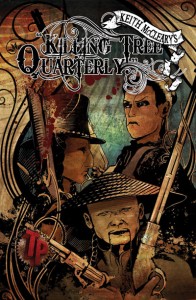
I know that my first comic, Killing Tree Quarterly, came out of that frustration—it’s this politically incorrect western about multicultural assassins that, for me, felt both really taboo and also historically accurate in a lot of ways. That project opened me up quite a bit, and got me thinking about how I could push my limits while still being honest with who I was as a writer.
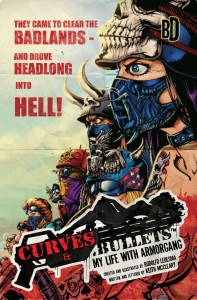
I suppose there’s still sort of a political soapbox festering in the work I do these days, and maybe I’ve gotten more comfortable having my politics filter into my writing. The comic I write now is called Curves & Bullets, and it’s sort of Tank Girl meets GI Joe. I knew when I teamed up with the artist, Rolo Ledesma, that all he wanted to do was draw scantily-clad women on motorcycles. I remember thinking, “My day job is being a grad student and teaching writing to 18-year-olds—this is going to be a lot for me to reconcile.”
I went back to Larry Hama’s old GI Joe comics from the 1980’s, and was reminded that the main thing those stories focused on was camaraderie and kicking ass, with no mention of the fact that the characters were a bunch of sweaty, ripped, half-naked dudes. So I wrote Curves & Bullets with the same basic guidelines. After our first issue came out, I immediately got responses that it was “weirdly feminist.” And my girlfriend points out that it’s one of the few action comics she can read that passes the Bechdel test. So, you know, small victories.
I guess the short answer is that I’m a genre writer with personal politics that don’t always jive with the tropes of the genres in which I work. I try to just let those two sides of myself disrupt each other as naturally as I can.
What do you feel is the purpose of literature or art? Feel free to answer separately.
I really don’t feel there’s a purpose for either. It’s like wood. Wood has no inherent purpose except to the tree. Saying that wood’s purpose is to be a chair, or a house—that feels sort of imperialistic. I know the implication here is for me to explain the purpose of my literature or art, but even that’s too much for me.
I do think it’s important to understand a particular project’s purpose, and to evaluate the worth of that purpose. But that’s case-by-case, and involves making sure you understand and abide by the rules of the thing you’re making, as you make it. It’s not about the purpose of literature or art as a grand gesture.
Here’s what I think: make the thing. Worry about what it means later. If you try to assign purpose to an entire medium, that’s editing. Editing something that isn’t done yet, that won’t be done until we’re done. See rule one.
You’ve been a design assistant, a proofreader, a video editor and graphic designer, a writing coach—how does having worn so many hats influence your selection of new projects?
I suppose sometimes I take on a project just because I want to see if I can do it. But more often, I take on projects that I think will be easy and straightforward, and then they’re not. And then I have to learn how to do something new in order to get them done.
That’s the cranky answer. I guess the real answer is that each new thing I learn to do helps me do everything else better. Two summers ago, Grant Leuning suggested I start running a game of Shadowrun for a group of our friends. Designing game scenarios instantly began influencing my writing, and managing a group of peers through those scenarios both drew upon and impacted my teaching. The more stuff you know how to do, the more stuff you know how to do.
Till you do too many things, and then you get cranky. Just ask anyone who’s ever collaborated with me.
What do you dream of, when you dream big, for where you’d like to be in your art or process in the next ten years?
Main thing, above all other things—I’d like to get over my hangups about submitting and have some work out on a large press. I’d like to have an agent—I hear they’re useful. I have a rather unwieldy 300-page “word hoard” kind of manuscript that I’d like to devote a summer to. Sophia Starmack and I wrote a teleplay for CCLaP a few years ago called The Gothickers, and we have at least a hundred pages of more Gothickers material that we need a winter abroad in order to finish.
Someday I would like to have an ongoing comic series with a big publisher. Someday I would like to write X-Men.
I also just want to get really good at Netrunner.
As a human being, what is the best advice you have to offer?
I feel like what I’m supposed to say here is that it’s important to love, to listen, to be. Or something. Something that would look good in an inspirational font with a beach scene behind it. But my preferred response to this question is Gary Oldman’s, when asked about his personal motto: “Fuck ‘em.”
I guess I would say, you know, three things: Get enough sleep. Don’t be afraid to be critical. Fuck ‘em.
With Matt E. Lewis, you’ve been engaged with editing a three volume project called States of Terror that pairs artists and authors to create a wonderful series of horror stories with illustrations. That’s an exciting multi-volume project. Can you speak to that?
Matt publishes a zine called The Radvocate, and he emailed me about a year ago when he was between issues. He said he was kicking around the ideas for a Halloween zine that would focus on monsters from each of the fifty states, and he wanted to know if I had any interest in collaborating. I kind of had an image right away for how I wanted it to look and feel, so I said yes. I’d worked with our art director, Adam Miller, on a variety of comic book projects for years, so I asked him if he knew three of four artists who might be willing to do illustrations for 20 or so stories. Adam said, “Well, how about 20 artists then?” We ended up with an artist and writer for each state monster, and our first volume covered 18 states.
I remember that about 72 hours after Matt sent me that first email, we had the title, the aesthetic, all the monsters, and probably 95% of the writers and artists. I crunched the numbers and realized that our “zine” was going to end up being a 200-page book, and we’d set ourselves a goal of getting the whole thing written, edited, assembled, and printed in a month. I think we ended up taking two months with it, but it was really nuts. The second volume just came out last month, and we got a ton of amazing people to contribute. It also took much longer to make, and was probably even more nuts.
The series has opened a lot of doors for us. We’ve gotten to know all these accomplished and talented people in a way that’s felt natural and fun, and I like that the project balances all the worlds I straddle personally—comics and fiction, literary and genre writing, graphic design and prose editing. To me the project feels so traditional in a lot of ways—the entire thing is modeled after old Creepy and Eerie magazines—but people seem to freak out at its hybridity, at all the things it’s doing. That’s kind of funny to me, but also really validating.
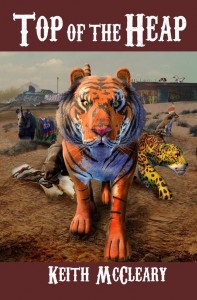 I’m really drawn to your comic Top of the Heap, available on your website, about a circus train crashing and the animals foraging for survival. One of my favorite things about it is both how the drawings themselves are so evocative and also how the text functions with both power and density (readers of this interview are invited to go read it). “The ringmaster and the acrobats served as food the first three days,” is the text on the first page depicting a crash, for example, spread across the artwork, moving along a diagonal in a visually appealing way. It almost seems each page is its own micro fiction entry, though they work together. The next page reads only, “The clowns were next.” When you pair image and text, is one or the other always primary, or at least in your first inclination?
Top of the Heap had a pretty strict set of self-imposed rules—I felt that each page had to require both text and image to make sense, and that the reader wouldn’t get the story unless they interacted with both. This comes from my experience with comics and picture books. It’s always easy to tell when you’re reading a comic that was created script-first—there’s way too much dialogue, and panel after panel of talking heads. It’s like a low-budget TV show on a single set. Comics that are planned visually, and then use text as support, almost always offer a more immersive experience even if the story is somewhat simple.
I think the same thing holds true for picture books. My mother taught children’s literature for most of her career, so I grew up with a lot of picture books around the house. I always felt a little let down by books that would have blocks of text on one page, with an illustration opposite. It seemed like a lost opportunity.
Alan Moore has written quite a bit about the uniqueness of the interplay between text and images in comics, and all the things that comics can do to a reader that no other form can do. When I make comics, I’m interested in exploiting the medium’s strengths in whatever ways I can.
With this comic, you tell a big story with few words. Can you tell us how the vivid artwork and structure of the narrative was conceived?
 Both Top of the Heap and Killing Tree Quarterly were illustrated using a combination of Photoshop and Poser, which is consumer-grade 3D software that, as far as I can tell, is mostly used in the creation of animated porn. I learned about Poser back in 2006 at the first New York Comic Con, where they’d set up a booth and were running demos. I thought the renders looked kind of junky, actually, but I figured I could use my graphic design chops to clean them up. I’d been looking for a way to make comics on my own without having to rely on my shaky drawing hand, so it was a real boon for me.
On a technical level, the way my process worked was that I would design the characters and make setpieces in 3D, set the lights and the camera angles, and then render still images to make my panels. The backgrounds were usually some kind of photomontage, run through a bunch of filters (and sometimes even run through Poser as two-dimensional objects) in order to make the whole thing more seamless. My assembly was all in Photoshop, and I think some of those pages ended up with over 100 layers.
In terms of conceptualizing the project, I started with a three-page prose story, as I mentioned. I originally had the idea that each page would have multiple panels like a traditional comic, but the renders were so complicated and labor intensive that doing full-page images ended up making more sense. Then it was just a LOT of storyboarding, stripping the story down to its most basic elements, the fewest number of beats I could while still keeping the text minimal. Not including pre-planning, I think making the book took about six months. I remember writing down “Show, Don’t Tell” on all of my notes. How could I make an entire story with zero dialogue and zero exposition? Show, don’t tell. Show, don’t tell. I still look back on it and see sentences that feel too long.
You run The New Comics, an ongoing interview series, on Entropy. How do you find the time to do all the things you do? Is it service to the comic community to support the work of other artists?
I don’t think I manage my time as well as I could. It’s only when I look backward that it feels like I’ve done a lot of stuff. Any time I’m focused on one project, that means three others are getting ignored. I was having a conversation with Nick Francis Potter when I interviewed him, and we agreed that the main way we knew of to get multiple projects done at once is to use them against each other—when you’re procrastinating on one thing, use that time to do another thing. Getting two projects done at once is somehow easier than focusing on one.
In terms of the Entropy gig, I’d been wanting to work with that group for a long time. I have a lot of respect for Janice Lee and Michael Seidlinger—talk about workhorses. Those two aren’t even human. When Janice put out a call that she was looking for someone who could curate comic content for them, I knew that was something I could do better than anyone else. I think that was literally my pitch: “I know what you want, and I know you will not find anyone else who knows how to do it.” Being able to bridge indie lit and comics, that’s pretty tricky, but it’s right in the middle of my particular sandbox.
I do like to support the work of people I like—I don’t know that I consciously think about the ‘community,’ per se, but I’m interested in spotlighting people who are good, who might be like me in that they’re still in the process of figuring out how to get their creative machine up and running. Helping to make that happen, or to talk to people about how they’re tackling the problem, is really cathartic for me. It’s made my own insecurities less insurmountable. It’s made me feel less alone. I just wish I had the time to do more interviews, but I’m happy each time we finish one and get the work out there.
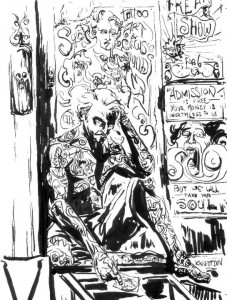 Regarding fiction, you have a blog called Gchatus where flash fiction is the primary medium. There are some beautiful pieces there. I particularly like the piece called “On a Beach Outside: Fanfiction” where the text reads, “We forget that there are a thousand universes and we are lucky to live in this one. We doubt that this means we are allowed to want for larger things, to hunger for wider spaces. Our luck does not exclude the possibility for wanting more.” The depth of the work is clear. But you also have a novel you’re shopping and a graphic novel, can you speak to moving between short work and long work in prose? How your process works?
Gchatus started when I was at a particularly low point in my writing—I think I was stop-starting on a novel, and otherwise didn’t have a lot going on. I was envious of my artist friends who were drawing every day, especially because I would see them post their warm-up drawings on social media each morning. It seemed like a nice way to break up the isolation of making new material, and to build a bit of a fanbase at the same time. I started writing these microfictions—maybe 80 words max—in my gchat status box, and when I had enough of them I began a Tumblr. I did one every day, and pretty soon my longform writing started getting better. I just felt so much more well-oiled.
When I was writing the rough draft of the novel you mentioned, I was working a desk job where I knew no one would ask me to do anything before 11am, even though I had to be at my desk at 9. So each morning I would come in, brew some tea, write a gchatus, and then do 1000 words on my manuscript. Five days a week, weekends off.
I don’t use the blog as regularly now, but I think writing short fiction has REALLY helped my long fiction. Minimalism is the key to everything—even if I’m writing longform, I’m jumping from topic to topic, trying to make a collage of the best bits. It’s just that I’m building bigger and bigger collages.
Other than that, my process is really straightforward. I write. I force myself to write. I force my fingers to move. I have a little outline for a new project I’m working on, but it’s only about a page of notes—when Sophia Starmack and I started writing together, we decided we would aim for a 60 thousand word book by writing 12 chapters, 5 partitions per chapter. 60 little parts, a thousand words each. I still use the same formula. It’s a completely arbitrary formula, and you’ve got to be willing to let yourself tangent from it so that things stay fresh. The only purpose of the formula is to help you generate a draft, and by extension the only purpose of the draft is to give you something to revise. Revision is where the actual work lies. Until then, you’ve just got to do whatever it takes to make yourself into a word-churning machine.
When I sit down to write, I tend to just put on pop songs on repeat and zone out, then check my word count after I run out of steam. If the writing is getting boring, I turn the scene around until I can see another way in. I remember once I was riding the L train from Manhattan to Brooklyn, and there was a guy across from me with a Rubiks Cube. He kept tossing the cube in his hand, and with every few tosses the panels would have a new pattern on them—checkerboard, flat colors, other things. When I’m writing and hit a wall, I stop and I think about what I’m writing like that cube. I throw it around until I can see something else to do with it.
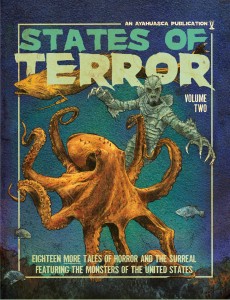 What’s in the immediate pipeline for your readers next? And what are you working on now? Give us a sneak peek.
The novel I’m shopping is called CIRCUS+THE SKIN, and it’s about a tattooed man at a circus who’s also a war veteran, and who starts losing his grip on reality after his circus is wiped out by a bad storm while en route through the Midwest. It’s got some elements of noir and horror and western gothic in it, and right now I feel pretty good about it. I’ve had a bit of it published in Weave with some amazing art from Ken Knudtsen, and more of it is due to appear in New Dead Families next year.
Matt and Adam and I are going to start production on States of Terror Vol 3 just as soon as we’re properly recovered from Vol 2, and Rolo has started pestering me for thumbnails so we can start the next issue of Curves & Bullets.
Other than that, I’m in the middle of hardcore NaNoWriMo’ing with some other San Diego writers. I’ve always sort of poo-pooed NNWM in the past, but I’m getting a lot out of it. I’m already about halfway through a new manuscript. It’s this big cyberpunk thing about a guy who’s addicted to reprogramming his personality through a hard drive in his head. I’m trying not to read back on it too much, but I wrote this paragraph yesterday and liked it, so I’ll just add it here:
“You might think that there is something profane in the way that we watch each other, the way each moment is not a true thing but simply an instant to be monitored and recorded, catalogued and framed. To this I ask you, have you engaged in the glory of a collective? To you know what it is to bring an Indian Elephant made of wood to life? How is it not that we are working together toward constant theater? How is it that this unliving is not in fact us at our most alive?”
Writers on Craft is hosted by Heather Fowler, who cares about writing. She does a lot of it. Visit her profile on Fictionaut or see here for more: www.heatherfowlerwrites.com.